Modern aesthetic treatments work with the body's own processes to support skin health, refine contours, and encourage a sense of quiet confidence — without surgery, without dramatic change.
Some changes in the body and skin are normal processes of aging. Depending on your age, skin can lose some of its prior firmness over the years. Facial contours can soften. Stubborn fat deposits can be a concern for some even when maintaining a healthy diet and active lifestyle. At most, people experience these changes in a subtle way over the years and are just seeking subtle professional help to look healthy and well-rested.
Aesthetic medicine has become an extremely competitive area of practice in recent years. Medical technology has advanced to a point where practitioners can provide an array of non-surgical treatments that enhance skin health and body contouring — without surgical intervention or prolonged recovery.
Unlike traditional cosmetic surgery, many modern aesthetic treatments actually stimulate the body to carry out its own processes and instead make it work more efficiently. Some technologies encourage the production of collagen, the structural protein that keeps skin firm and resilient. Others focus treatment to specific fat areas to help with body contouring. Because these procedures aren’t surgical, recovery time is usually minimal, and most treatments help people resuming some able routine relatively quickly.
Modern aesthetics are based on the philosophy of subtlety. Even small changes can lead to significant progress. “Subtle enhancements often appear the most natural on people as it helps them to look genuinely refreshed instead of modified. What’s important, in the end, isn’t to achieve a different look — it’s simply to enhance what is already there and allow each individual to feel comfortable and confident in their own skin.
Choosing to explore aesthetic treatments can feel like a significant step. People often want reassurance that their care will be handled with genuine professionalism, clinical knowledge, and respect for their individual goals. A structured and patient-centred approach makes all the difference in creating a safe and supportive experience.
Treatments are selected only when appropriate for an individual's health, medical history, and personal goals. Safety assessment forms the foundation of every recommendation.
No two individuals receive the same plan. Every recommendation is carefully tailored to the person's unique skin quality, anatomy, lifestyle, and the results they hope to achieve.
Professionals performing aesthetic treatments carry knowledge of facial and body anatomy. This expertise ensures that treatments are delivered with precision, care, and clinical confidence.
The aim is always subtle improvement rather than dramatic change. Results are designed to feel authentic, balanced, and in harmony with each person's existing features.
Guidance and support continue well beyond the treatment itself. Follow-up appointments allow practitioners to review progress and ensure ongoing wellbeing throughout the recovery journey.
All consultations and treatments take place in a calm, discreet environment. Confidentiality and respect for personal boundaries are central to every patient interaction.

Aesthetic treatments follow a structured and thoughtful pathway from the very first conversation through to follow-up care. Each stage of the process is designed to ensure safety, suitability, and the most balanced possible outcome for each individual.
A professional approach to aesthetics always begins with a careful consultation. During this conversation, practitioners assess skin quality, discuss personal goals, and review medical history in detail. This step is fundamental — it helps determine whether a particular treatment is suitable and which options are most likely to produce balanced, natural results.
Medical history, lifestyle factors, and any existing health conditions are reviewed before treatment is considered. This ensures that safety remains the priority at every stage.
The practitioner carefully evaluates the skin or treatment area, discusses what changes may be achievable, and answers all questions openly. Realistic expectations are always explained with honesty and clarity.
Once suitability is confirmed, an individually tailored plan is developed. This may involve a single treatment or a thoughtfully selected combination that complements the body's natural processes.
Treatment is delivered carefully and precisely. Simple aftercare guidance is provided afterwards, and follow-up appointments are offered to review progress and support ongoing wellbeing.
Aesthetic results rarely happen overnight. Many treatments work gradually, encouraging the body's own renewal processes over a period of weeks. This approach produces the most natural and lasting improvements.
From initial consultation through to follow-up, every stage is designed with patient safety and wellbeing as the guiding priority.
Aesthetic treatments are not one-size-fits-all, and suitability is always assessed individually. A number of factors are taken into account during consultation to determine whether a treatment is appropriate and likely to produce the results a person is hoping for.
People who notice mild to moderate changes in skin firmness on the face, jawline, or neck may find non-surgical skin-tightening treatments beneficial. These approaches encourage natural collagen renewal without surgery.
Some individuals carry small areas of localised fat that do not respond to diet or exercise alone. Body contouring treatments can target these areas safely, supporting gradual and natural-looking changes.
Those who wish to address uneven skin texture, mild fine lines, or early changes associated with ageing may benefit from treatments designed to stimulate collagen and elastin production within the skin.
Those experiencing mild bladder control issues or changes in pelvic floor strength may be suitable for specialist EMS-based treatments designed to support and strengthen these important muscle groups.
Individuals with small, benign skin irregularities such as skin tags or minor pigment concerns may be suitable for precise and controlled blemish removal treatments using established clinical technology.
The most suitable candidates for aesthetic treatments are those who approach their care with patience and realistic goals. Treatments produce gradual improvement rather than instant transformation, and this is always discussed openly during consultation.
Understanding the nature of a concern is an important first step before any treatment is considered. Many of the changes people notice in their skin and body are entirely natural responses to time, lifestyle, and hormonal shifts. Modern aesthetic treatments are designed to address these concerns in a considered and evidence-informed way.
Collagen and elastin — the proteins responsible for skin's structure and resilience — reduce naturally over time. This gradual loss can result in softened contours, mild sagging around the jawline, or reduced skin tightness across the face and neck. Non-surgical treatments can help stimulate the body's own collagen production to support gradual improvement.
Certain areas of the body are naturally prone to retaining fat regardless of diet or physical activity. The abdomen, flanks, thighs, and area beneath the chin are among the most commonly reported areas. These pockets of fat can be resistant to lifestyle changes, and body contouring treatments offer a non-surgical method of addressing them.
Skin texture can become uneven as a result of environmental exposure, ageing, or changes in skin cell turnover. People may notice areas of roughness, early fine lines, or slight irregularities in skin tone. Treatments that stimulate cellular renewal and collagen production can help improve overall texture and tone over time.
Pelvic floor muscles play an essential role in bladder control, core stability, and overall pelvic health. These muscles can weaken following childbirth, hormonal changes, or simply over time. When this occurs, some individuals experience mild symptoms of stress incontinence. Targeted muscle stimulation treatments can help strengthen these muscles progressively.
Hormonal changes — particularly around menopause or following childbirth — can affect the strength, elasticity, and comfort of vaginal tissues. These changes are a normal part of life and can be addressed discreetly and safely using gentle radiofrequency-based treatments designed to support tissue health and renewal.
Small benign growths, skin tags, or certain pigment irregularities can appear on the skin over time. While these are typically harmless, many individuals wish to have them removed for cosmetic or comfort reasons. Precise cryotherapy technology allows for targeted removal with minimal disruption to surrounding healthy tissue.
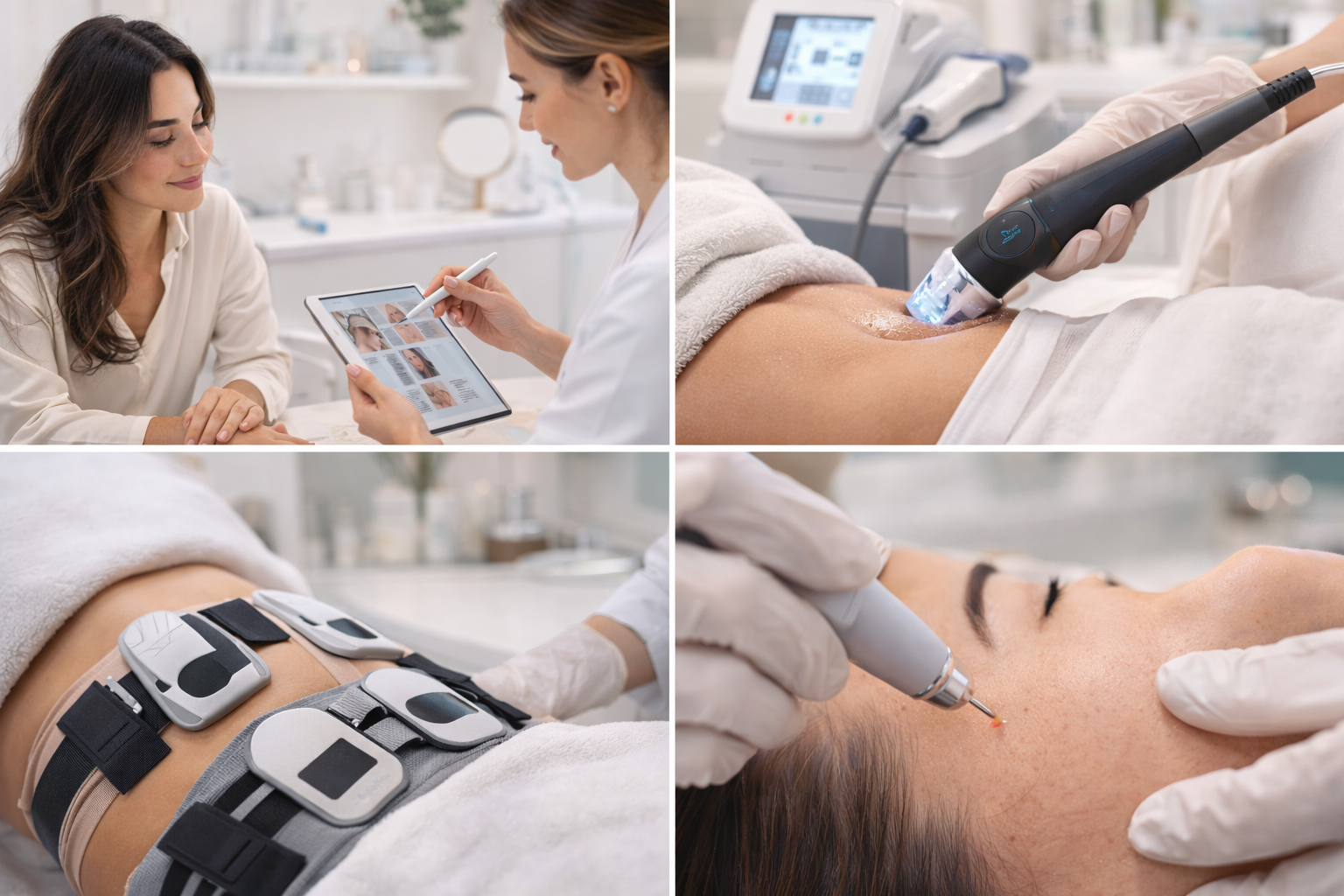
Modern aesthetic medicine includes a variety of non-surgical treatments designed to support specific concerns. Each treatment uses established technology to target a particular area or goal. Below is a detailed overview of the treatments commonly explored, including what each procedure involves and what patients can expect during the process.
HIFU treatments use focused ultrasound energy to reach deeper layers of the skin without affecting the surface. This energy gently stimulates collagen production deep within the tissue. Over time, the natural collagen renewal process may help improve firmness and create a subtle lifting effect on the face, jawline, and neck.
Results develop gradually over several weeks as the body responds to the stimulation. This is a widely used technology in medical aesthetics, valued for producing natural-looking improvements in skin tightness without surgical intervention.
Cryolipolysis works by exposing targeted areas of fat to carefully controlled cooling temperatures. Fat cells are more sensitive to cold than surrounding tissue, and when cooled precisely, they begin to break down naturally. Over time, the body processes and removes these cells through its own metabolic systems, resulting in gradual body contouring.
This treatment is commonly explored for areas such as the abdomen, thighs, flanks, and other regions where stubborn fat tends to accumulate despite a healthy lifestyle.
Electrical Muscle Stimulation treatments deliver controlled electrical impulses to targeted muscle groups, encouraging them to contract in a manner similar to exercise. These contractions can help support muscle tone and definition, and are often explored by individuals who wish to complement their existing healthy habits with targeted muscle activation.
EMS body sculpting is not a replacement for physical activity, but it may support muscle conditioning in specific areas including the abdomen, thighs, and buttocks.
Morpheus8 combines two established skin-renewal technologies: microneedling and radiofrequency energy. Microneedling creates very small micro-channels in the skin using fine needles, while radiofrequency energy is delivered through these channels into deeper skin layers. This combination stimulates both collagen and elastin production.
The treatment is commonly used to improve uneven skin texture, reduce mild skin laxity, and address early visible signs of skin ageing. Results develop gradually as the skin undergoes natural renewal.
Aqualyx treatments involve carefully placed injections of a solution designed to break down fat cells within specific, localised areas. Once the solution has acted on the cells, the body naturally processes and removes them over time. This treatment is particularly effective for small deposits of fat that are difficult to address through lifestyle changes alone, including beneath the chin and certain areas of the abdomen.
The Cryopen device uses a controlled, precise application of extremely cold temperatures to treat benign skin blemishes. This targeted freezing destroys unwanted skin cells while protecting the healthy tissue immediately surrounding the treated area. The technique is well-suited to minor skin concerns such as skin tags, small benign growths, and certain surface pigment irregularities.
Femiwand uses gentle radiofrequency energy to support vaginal tissue health in a non-surgical and discreet way. The treatment gently warms the tissue, stimulating collagen production and encouraging natural tissue renewal. It may help improve comfort, tissue tone, and overall vaginal wellbeing for those experiencing changes related to hormonal shifts, ageing, or childbirth.
Pelvic floor muscles are essential to bladder control, core stability, and overall pelvic health. When these muscles weaken, individuals may experience symptoms of stress incontinence. Targeted EMS pelvic floor treatment uses controlled electrical stimulation to activate these muscles, encouraging progressive strengthening over a series of comfortable, non-invasive sessions.
Understanding the typical timeline for aesthetic results is an important part of approaching treatment with realistic expectations. Many non-surgical procedures work by encouraging the body's own biological processes, which means visible improvements often develop gradually rather than appearing immediately.
This gradual nature is actually one of the key benefits of non-surgical aesthetics. Changes that develop slowly tend to look the most natural and balanced. The goal is always subtle, authentic improvement rather than a dramatic or obvious transformation.
Most collagen-stimulating treatments show visible results over several weeks as the body's natural renewal processes unfold.
Some treatments are most effective when performed across a planned series of sessions rather than in a single visit.
Photographs are taken with consent to help track subtle changes over time, giving both patient and practitioner a clear view of progress.
Every person's body responds differently. Results vary between individuals, and this is always discussed honestly during consultation.
Aesthetic treatments are not about perfection. They are about supporting natural beauty, maintaining healthy skin, and helping individuals feel quietly confident in their appearance. Practitioners are always transparent about what may realistically be achieved and how long results may take to develop. When expectations are grounded in reality, the experience — and the outcome — is far more rewarding.
Results also require ongoing care. Healthy lifestyle habits, consistent skincare, and appropriate maintenance sessions all contribute to sustaining improvements over time. Aesthetics works best as part of a balanced approach to overall wellbeing.
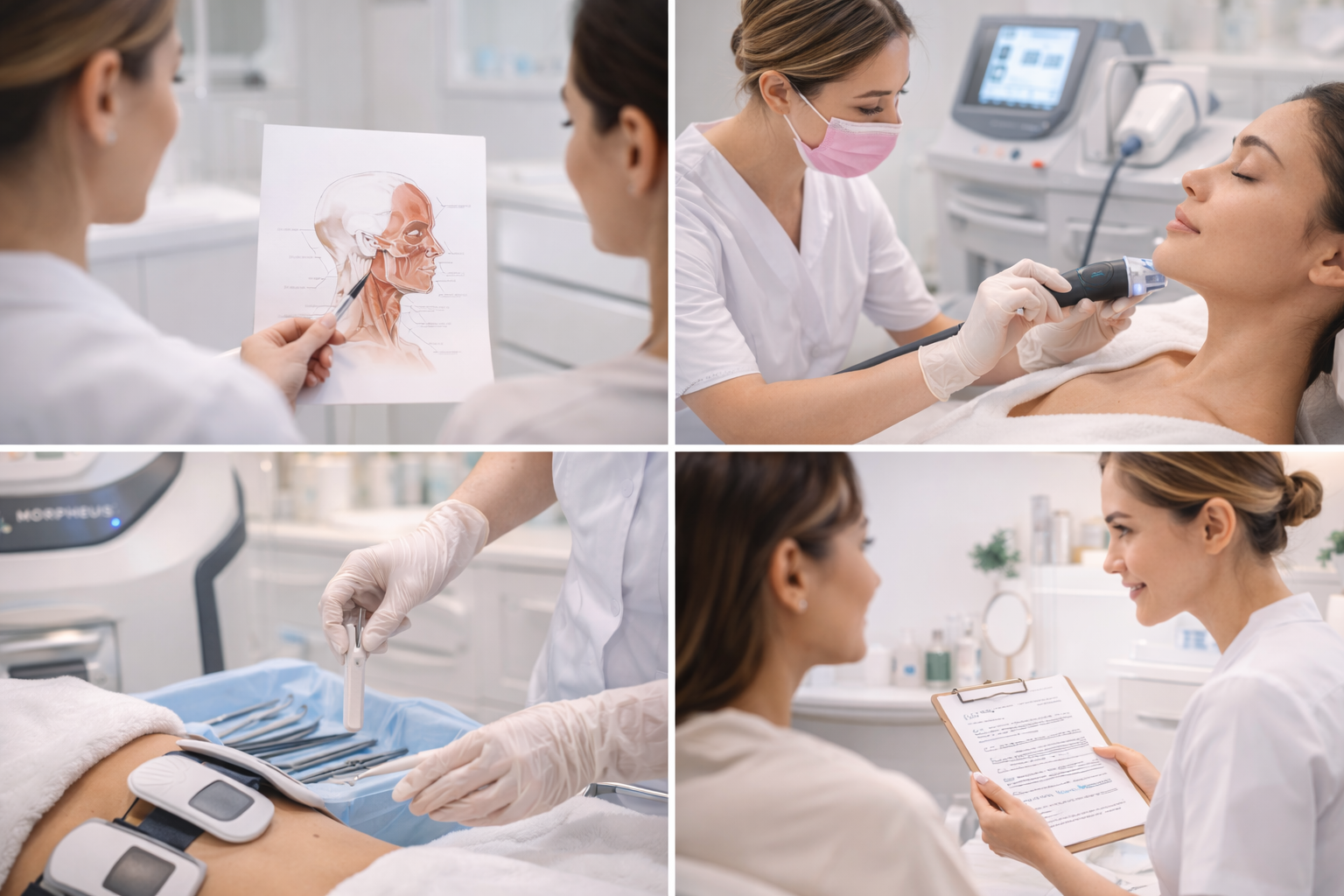
Safety is the foundation of every aspect of responsible aesthetic practice. Every decision — from the choice of treatment technology to the clinical environment in which procedures are performed — is guided by a commitment to patient wellbeing.
Practitioners performing aesthetic treatments are trained to understand the anatomy of the face and body in detail. This knowledge ensures that treatments are delivered with precision and a deep understanding of the structures being treated. Technical training is supported by strict adherence to clinical hygiene and infection control standards.
Practitioners carry a thorough understanding of facial and body anatomy. This expertise is essential to the safe delivery of all aesthetic treatments.
Treatment environments are maintained to clinical standards. Equipment is carefully cleaned between sessions, and single-use materials are used wherever clinically appropriate.
Responsible practice includes declining treatments when they are not appropriate. Some individuals may need medical advice or alternative options before aesthetic procedures are considered.
Only technologies that are established within medical aesthetics practice are used. Equipment is selected based on safety profile, clinical evidence, and suitability for patient care.
From the moment a patient first enquires to the completion of their follow-up care, safety is never a secondary consideration. It is the guiding principle of every clinical decision made.
No treatment proceeds until suitability has been carefully confirmed. This step protects every patient and ensures that recommendations are both appropriate and genuinely beneficial.
The care taken after an aesthetic treatment is just as important as the treatment itself. Following aftercare guidance properly helps protect the treatment area, supports the body's natural healing and renewal processes, and allows results to develop in the most balanced and effective way.
In the hours and days immediately following treatment, the skin and tissue may be more sensitive than usual. Following any specific guidance provided by the practitioner — such as avoiding certain products or exposures — helps protect the treated area and supports the beginning of the renewal process.
For skin-based treatments, sun protection is particularly important during the recovery period. UV exposure can interfere with the skin's natural healing and collagen-building processes. Gentle, fragrance-free skincare products are generally recommended while the skin continues to renew itself.
Keeping the body well-hydrated supports natural metabolic and cellular processes, which is particularly relevant for treatments such as cryolipolysis where the body is processing and removing treated fat cells. Maintaining healthy lifestyle habits complements the benefits of aesthetic treatment.
Follow-up consultations allow the practitioner to review how the treatment has progressed, assess results, and offer any additional guidance. These appointments also provide an opportunity to discuss whether further sessions may be of benefit.
Many aesthetic results are best maintained through consistent care and healthy habits over the longer term. Maintenance sessions may be recommended at appropriate intervals to sustain improvements and continue supporting the body's natural renewal processes.
Any questions or concerns that arise after treatment should be raised with the practitioner without hesitation. Open communication between patient and practitioner is an important part of the care relationship and supports the best possible outcomes.
The following answers address the questions most commonly raised by people considering aesthetic treatments. If a question is not covered here, it can always be raised during a consultation.
Hearing about the experiences of others can offer reassurance to those considering treatment for the first time. Each journey is personal and unique, but many individuals describe similar feelings of renewed confidence, comfort, and satisfaction following their care.
I wanted a subtle improvement rather than a dramatic change. The results felt entirely natural and exactly what I had hoped for. The consultation was thorough and I felt genuinely listened to throughout.
The consultation was thorough and deeply reassuring. I felt fully informed before making any decision about treatment. There was never any pressure — just honest, professional guidance.
My treatment plan was explained clearly at every stage. The gradual results helped me feel more confident without looking like a different person — exactly what I was hoping to achieve.
What stood out most was the professional and calm environment. Everything felt thoughtful, safe, and unhurried. I would not hesitate to recommend this kind of considered approach to anyone.
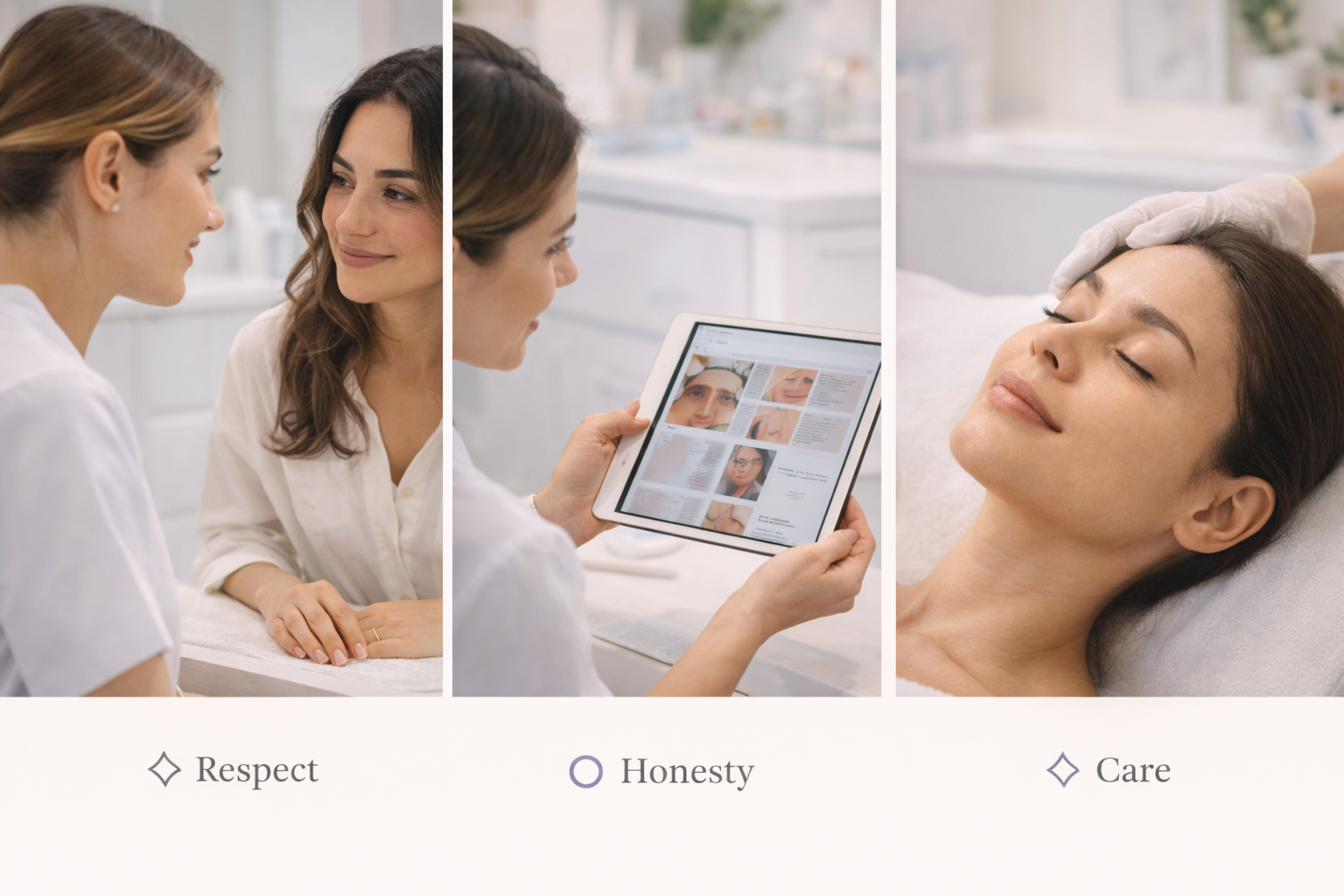
At the heart of this approach to aesthetic care is a simple belief: that every individual deserves to feel comfortable, respected, and genuinely supported throughout their treatment journey. This is not about changing who someone is — it is about helping each person feel more confident in who they already are.
Thoughtful consultations, honest conversations, and personalised treatment plans all contribute to an experience that feels personal and considered rather than transactional. When patients feel fully informed and supported at every stage, decisions about treatment become both easier and more confident.
No two individuals have the same face, body, or set of goals. This is why every treatment recommendation is made with the unique person in mind, rather than following a generic protocol. The right treatment for one person may be entirely different from the right treatment for another, and this is always respected throughout the consultation process.
Aesthetics treatments work best as part of a balanced approach to overall wellbeing. Healthy habits, good skincare routines, and realistic expectations all contribute to the best possible results over time.
Every individual is treated with genuine respect for their goals, concerns, and autonomy. Privacy is upheld throughout every interaction.
Open and truthful communication is central to responsible practice. Patients are always informed about what treatment can and cannot achieve.
Genuine care for patient wellbeing guides every decision — from the initial consultation to the final follow-up appointment and beyond.
For those curious about what modern aesthetic treatments may offer, exploring information across these pages is a valuable starting point. Understanding available treatments, learning about the consultation process, and asking questions are all important steps towards making a fully informed and confident decision.
There is no obligation to proceed with any treatment until a person feels completely comfortable and properly informed. The role of the consultation is not to sell, but to listen, assess, and advise — and a reputable practitioner will always be willing to take the time necessary to ensure that happens. will always be willing to take the time necessary to ensure that happens.
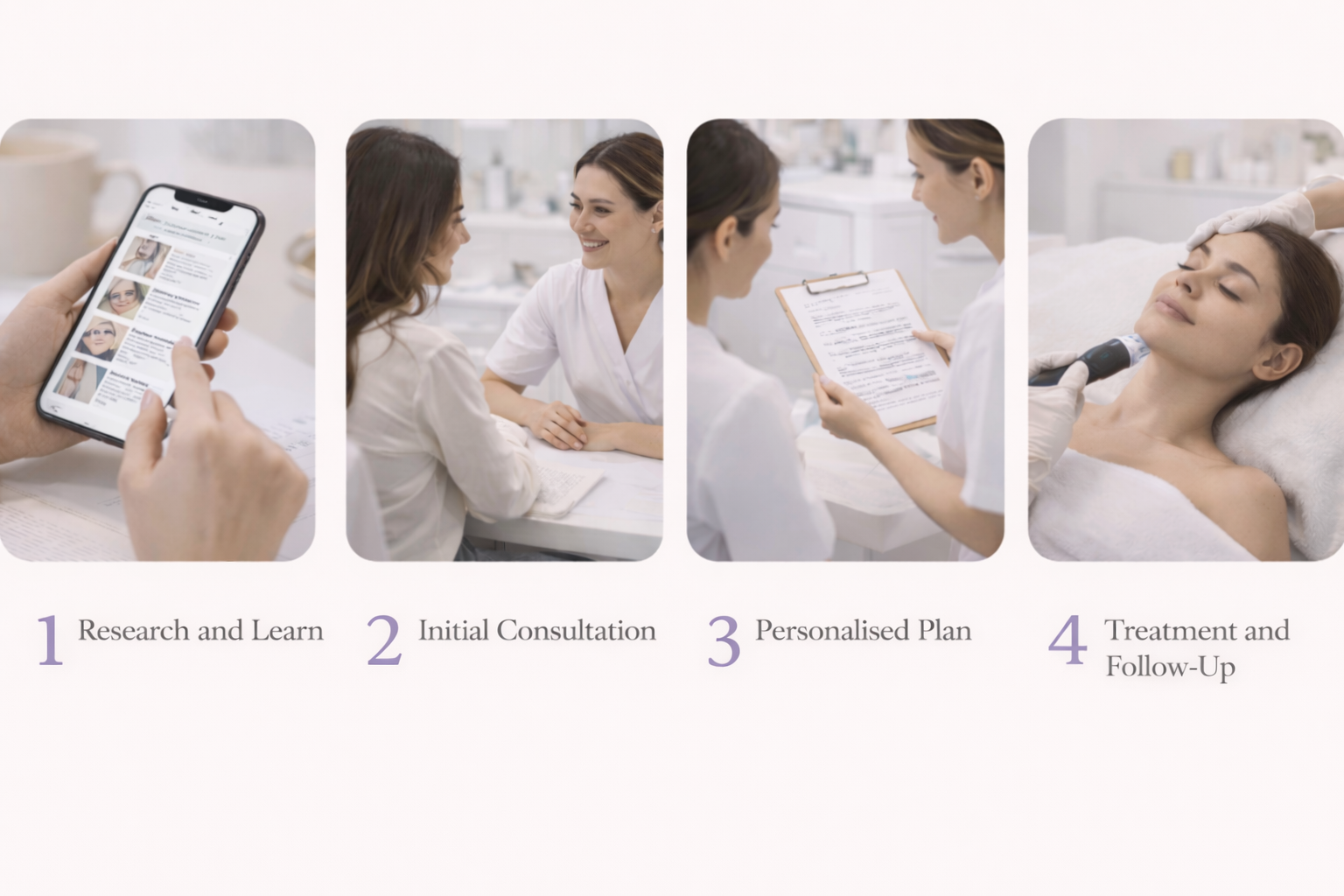
Explore the treatment information available to understand what each procedure involves and what results may be expected.
A thorough consultation is the foundation of every treatment journey. This is the opportunity to ask questions and discuss personal goals openly.
Once suitability is confirmed, a treatment plan is carefully developed around individual needs, health, and the results a person hopes to achieve.
Treatment is delivered with care, and ongoing support ensures the journey continues to align with individual goals and overall wellbeing.
Modern aesthetic treatments are not about transformation — they are about thoughtful, gradual support for the natural features that each individual already has. When treatments are chosen carefully, performed by trained professionals, and approached with realistic expectations, they can support a genuine and quiet sense of confidence in everyday life. Every person's journey is different. Yours begins with a conversation.